
RECAP: Fall Family Retreat
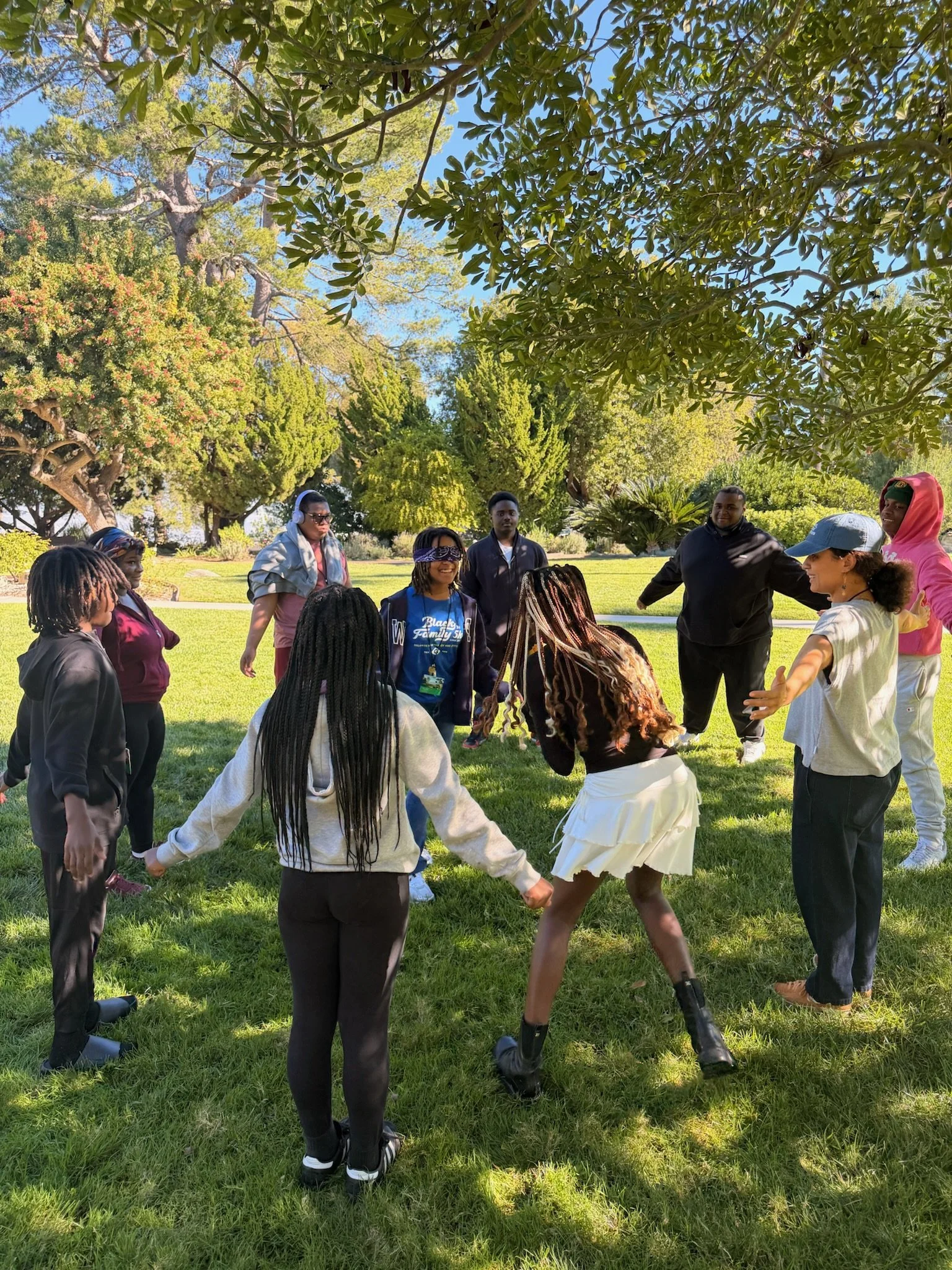
P4L Youth enjoying Community Building Games Outdoors
In November 2025, Parenting for Liberation hosted its annual fall Strong African American Families (SAAF) retreat. P4L’s SAAF retreat consists of gathering African-American parents and youth at a retreat center to enjoy quality time, learning, and fun, while learning tools and skills to reduce substance abuse and other risky behaviors.
At the retreat, P4L leads family participants in the Strong African American Families (SAAF) program curriculum, a research-backed substance abuse prevention program created by the University of Georgia. Aside from sharing the SAAF curriculum that helps youth develop confidence to resist peer pressure and set positive goals, given the current political climate, P4L created new sessions incorporating social justice youth identity development principles. P4L’s facilitators shared an overview of grassroots activism led by the Black Panther Party for Self-Defense (BPP) and their Ten Point Program which guided their civic engagement.
Drawing inspiration from the BPP which was largely comprised of young adults not much older than our participants, P4L youth created their own Ten Point Program to articulate areas in their lives, schools, and communities that they would like to see transformed, and discussed strategies on how they can work to achieve those outcomes. Their vision for justice included:
Point 6, “More resources/wellness centers for youth to navigate stress and stay off the streets” and
Point 4, “We want a Black Student Union in all schools and more Black educators”, among others.
Because we know youth programming must integrate healing space for youth to lessen anxiety and fear–also owing to the current political climate and ongoing injustices–the SAAF retreat included families playing spirited games of Uno and Taboo, a fun karaoke night, and parents bonding over shared triumphs and trials of raising teens and gaining new insights on supporting them in this growth stage.
Simultaneously, parents and caregivers worked on developing their communication and relational skills to best show up as trusted and reliable adults in their young peoples’ lives. Parents worked on their own healing while learning liberated practices that are culturally relevant and actionable.